Would-Be Entrepreneur


Venture Planning:
Chart, Definitions, Concepts


Venture Planning Associates


What Is Venture Planning?

① Venture Planning is a personal assessment of your feelings and the feasibility of a venture.

② Venture Planning answers the question, should I be doing this and why?

③ The Venture Feasibility process examines seven key factors in any venture.

▪ The Founders' Compelling Interest: The force that drives you.

▪ Customer Opportunities based on customer wants and needs.

▪ Customer Profiles defines the target market and potential customers

▪ Venture Concepts evaluates alternatives to filling those needs.

▪ Financial Resources identifies and evaluates the financial resources need to pursue alternative venture models.

▪ Entrepreneurial Assessment to find out if the entrepreneur and the venture are in alignment with respect to goals rewards, compelling interests and the ventures mission.

▪ Final venture evaluation of feasibility and comparison of alternatives.


④ What Venture Planning is not? It is not about writing a Business Plan. Sometimes a business plan is not needed.

⑤ Venture Planning does not require detailed funding source analysis, professional opinions, entity formation or detailed market analysis.

⑥ Venture Planning is development of a means of comparing various business models, usually through financial modeling to answer the six questions.

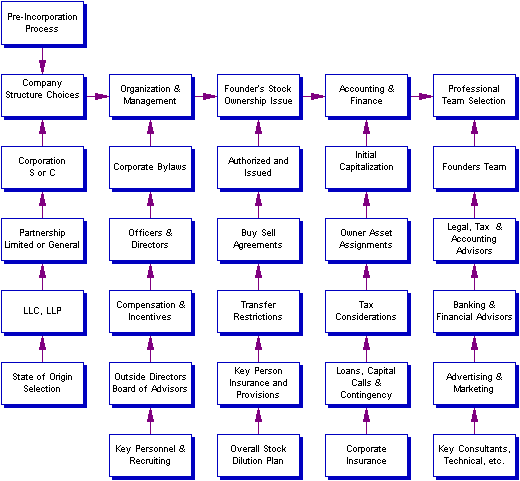
⑦ Venture Formation involves all of the following stages: Idea - Concept Development - Venture Development - Monitoring Progress - Initiating New Changes - Venture Feasibility Analysis - Business or Operational Plan - Budget vs. Actual - New Plans.

⑧ There are four keys to good venture planning:

1. Focus on one venture in one business area at a time.

2. Discover the opportunity and evaluate how to exploit it.

3. Develop three cases good, bad & likely for each scenario of a venture concept.

4. Identify what type of venture you want – Lifestyle Business, Smaller High-Profit Business or High-Growth Business. Each type has an entirely different model, implementation and end result. Each demands a different entrepreneurial approach and each requires different management and style.


OUTSTANDING INNOPRENEUR by Vadim Kptelnikov Innompic e-book PowerPoint download


Do you want:

● a Lifestyle Business with $1 million in annual sales, 1-4 employees and a solo operation?

● a Smaller High Profit Business with $1-$20 million in sales, 5 - 50 employees, where partners are required?, or

● a High Growth Business with $20-50 million or more in sales with more than 50 employees, that requires venture capital, investment banks and a public company?


⑨ There are 11 Keys To a Good First Venture

⑩ What To Do After the Feasibility Study of Numerous Concepts

● Pick three of the best with the "snap" of customer needs and pick the least costly concept.

● Decide to go or not. If you decide to go forward, do a detailed business plan or operational plan and then start.